

Projects and news
Our coastal environment is under pressure from activities on land, activities in the coastal marine area, and marine pests. Northland is surrounded by the sea and many Northland communities are located on our coast so we are also at risk from coastal hazards and changing climate.


Learn more about the challenges facing our coastal environment
The State of the Environment (Coastal) 2024 report draws on extensive NRC work, including regulatory, scientific, biodiversity, and biosecurity monitoring, to assess these impacts. It also challenges us to rethink what “normal” means in an environment being impacted by climate change. This document provides an in-depth analysis of the current conditions, challenges, and future outlook for our region’s coast.
2024: Te ora o te Taiao ā-Takutai Moana | State of Environment Coastal

Waipū coastal walk.
In November 2025, we released a report analysing heavy metal contamination in seabed sediments in Northland. Council regularly monitors heavy metals in seabed sediments, as part of our State of the Environment programme and by compliance checks on activities, such as discharges that can contribute to contamination.
This monitoring helps us:
- Assess current contamination levels along our coastline
- Track changes over time
- Make informed decisions to protect the moana of Te Taitokerau
Our latest report provides detailed analysis of sediment metal data, highlighting:
- Levels of contamination along Northland’s coastline
- Spatial patterns and areas of concern
- Trends and changes over time
Greater understanding of these patterns will help us manage both marine ecosystems and land-based activities that impact them over time.
See the report: Northland coastal sediment contaminant monitoring

Elevated metal contamination is often associated with point source discharges at boat maintenance facilities.
Monitoring plastic pollution in Northland
Radio New Zealand's "Our Changing World" is a science podcast that dives into a wide range of topics. Dr Claire Concannon follows scientists into the bush, over rivers, back to their labs and many places in-between to cover the most fascinating research being done in Aotearoa New Zealand.
Dr Concannon interviewed Northland Regional Council scientist Richie Griffiths, who's been using stormwater drains to estimate the scale of our plastic pollution problem.
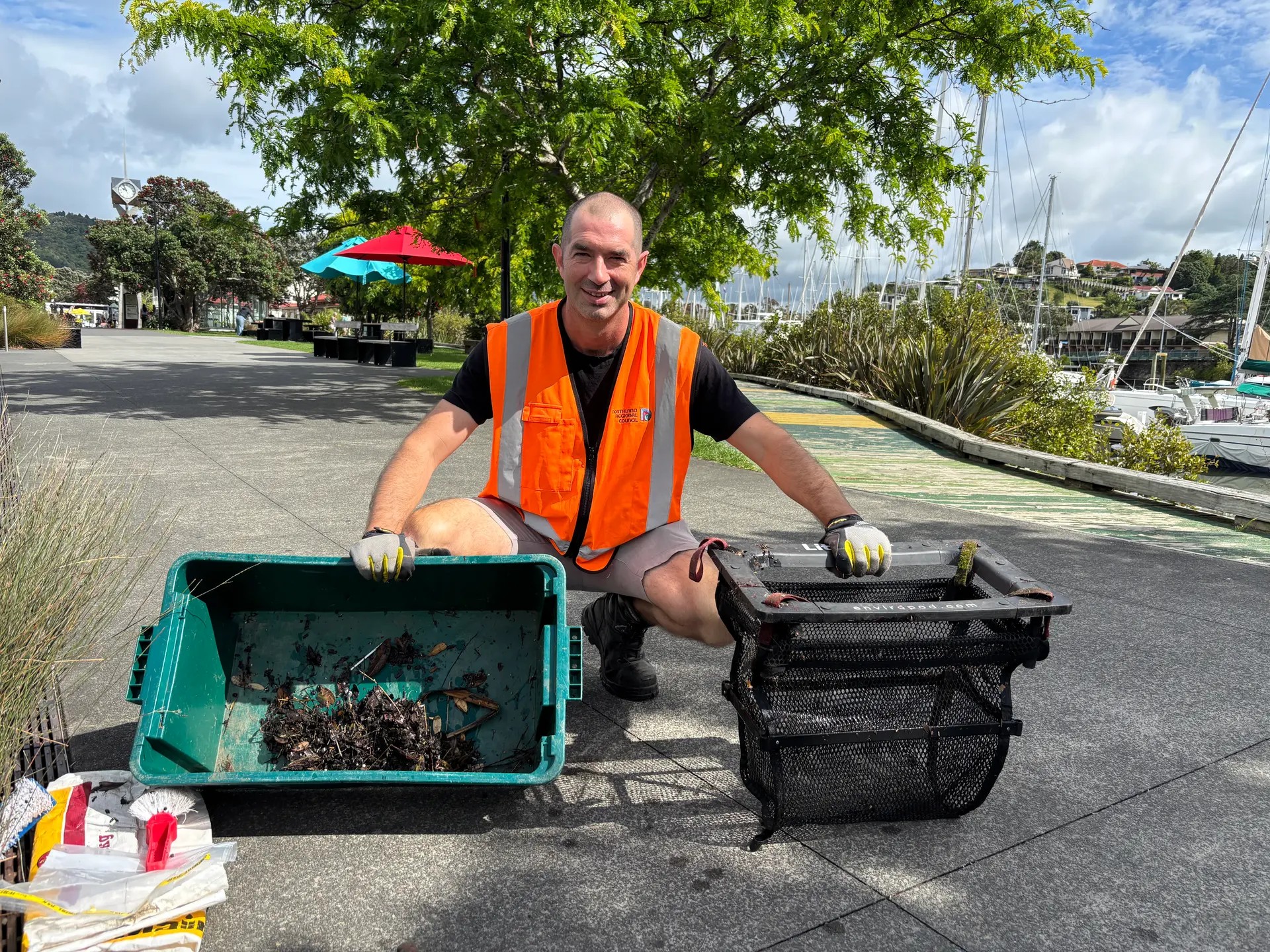
For the past few years, Richie and the Coastal team have been trialling Littatraps across a range of sites, including schools, council carparks and urban streets.
These simple devices sit inside stormwater drains and capture the litter that would otherwise wash straight into our rivers, harbours and the open coast.
Through this work, the team has been able to track:
- the types of litter entering stormwater
- how much material is captured over time
- which land uses contribute the most
- what this means for wildlife, ecosystems and human health
The data has helped build a clearer picture of how plastics move through our catchments. It has also supported national conversations on stormwater rules, tobacco waste, microplastics and the links between land-based litter and impacts on shellfish, seabirds and freshwater species.
Richie talks about the fieldwork behind the project, the surprising items turning up in Littatraps, the science partnership with University of Auckland, and how this mahi is shaping education and data collection.